
 Semesterrückblick: Seit dem WS 2005/06 (V 1.0) biete ich eine Lehrveranstaltung (LV) an, die allein in diesem Wintersemester 2006/07 (V 2.0) einen zahlenmäßigen Zuwachs von über 450% auf ca. 70 Teilnehmer hatte. Während Version 1.0 unter einigen Kinderkrankheiten (z.B. Reihenfolgefehler & Sprünge, technische Problemsituationen) einer frisch konzipierten LV litt, hat sich bei Version 2.0 in diesem Semester ein ausgereifteres Bild für mich ergeben (z.B. höhere effektive Lernzeiten, mehr Teilnehmerbeteiligung, konsistentes Konzept). Ich möchte jetzt nicht mit langweiligen Details quälen, und daher den Versionssprung an einer Methode verdeutlichen, die ich in meiner LV sehr erfolgreich seit Beginn einsetze, um für Überblick und Orientierung zu sorgen. Wie ich jetzt feststelle, eignet sich diese Methode prima, um einen schnellen Vergleich zwischen beiden Veranstaltungen durchzuführen. Anmerkung: Geschuldet ist die Methode vermutlich meiner seit 2005 bestehenden Nähe zur Nordsee, die mich inspiriert hat.
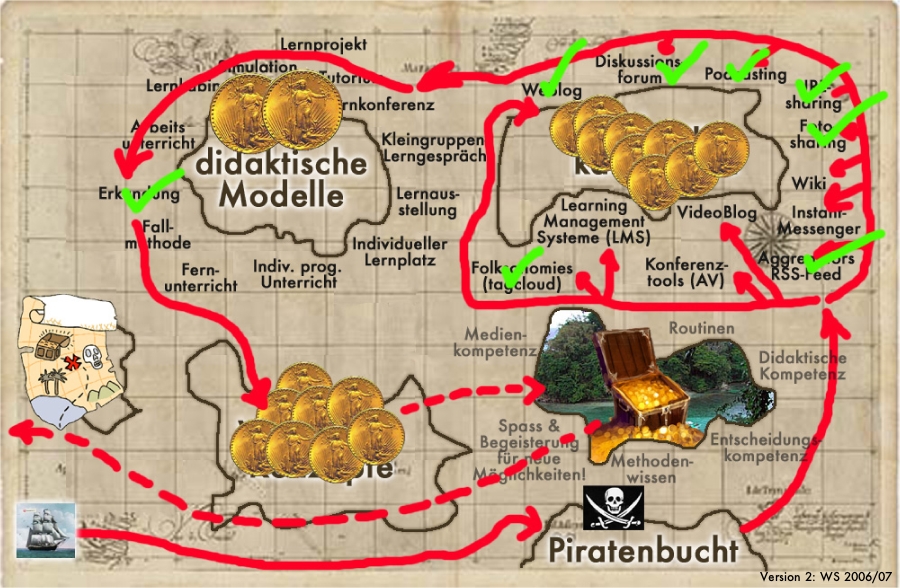
Karte 1: Kurs WS 2006/07 (Anklicken für Vergrößerung!)
Zu Beginn jeder LV stelle ich eine Art „Seekarte“ (siehe Karte 1) vor, die gut und gerne von einem Seefahrer angefertigt sein könnte. Darauf sind die Veranstaltungsziele in der Fläche aufgezeichnet. Große Themenblöcke als Inseln, einzelne Aspekte als Orte entlang der Küste dieser Inseln. Als Anzeiger für den aktuellen Aufenthaltsort wird ein Schiff verwendet. So weiß man immer, wo sich die LV thematisch gerade befindet. Auf einen Blick erschließt sich, was bereits abgehakt ist und was noch offen ist. Jede Ortsveränderung wird in der Karte mit einer roten Linie eingetragen und besuchte Orte werden mit einem grünen Haken markiert.
Das Schöne an dieser Karte ist, dass sie wie eine Art Entdeckungskarte der großen Seefahrer funktioniert, sie zeigt, was man alles entdeckt hat und was noch fehlt. Man sieht das Erreichte und weiß um das Unerreichte. Gegen Ende der LV ist die Karte meistens ziemlich voller Linien und Haken und die gesamte Karte sieht aus wie das Werk eines Seefahrers, der zwar mit Kompass aber wohl kaum mit einer Mannschaft von „Landratten“ unterwegs war. An dieser Stelle nun möchte ich die beiden Seekarten aus letztem und diesem Jahr festhalten.
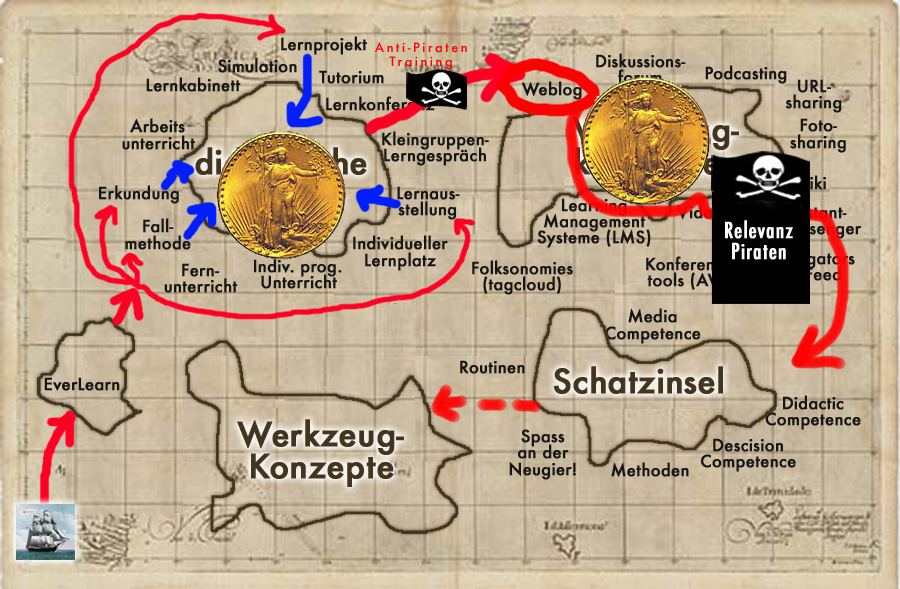
Karte 2: Kurs WS 2005/06 (Anklicken für Vergrößerung!)
Ich würde mich über Anregungen freuen, wie man diese Orientierungs- und Führungsmethode noch verbessern könnte. Z.B. mit Ideen, wie es noch authentischer hinsichtlich der Seefahrt werden könnte. Meine eigenen Ideen gehen dahin, dass ich die Karte noch etwas unvollständiger mache, z.B. bestimmte Inseln erst auf der Karte auftauchen, wenn man nah genug dran ist und Orte noch nicht komplettt eingezeichnet werden. Der Wandel von der Seekarte zur Schatzkarte soll natürlich weiterhin im Auge des Betrachters/Teilnehmers liegen.
Update 20.2.2007
Andrea Back beschreibt gerade, dass man durchaus auch zum Millionär werden kann, wenn man ein Lehrer mit Promi-Status (=exzellenter Lehrer?) (=Lehrer mit schlauem Selbstmarketing?) wird. Nachzulesen unter dem Titel „E-Learning-Promi werden und Millionen machen“ bzw. direkt bei BusinessWeek lesen. Na da frag ich doch einfach mal in die Runde: Wer hilft mir bei der ersten Million, die ja bekanntlich die schwerste ist? ;-) (via LearningWaves)
Why do I blog this? Überall ruft es derzeit nach einer Exzellenz nicht nur in der Forschung, sondern auch in der Lehre (z.B. hier, hier, hier, hier, hier, hier, hier und hier). Nun, was liegt da näher, diese mit einfachen Methoden zu verbessern? Ich bittte also um viele nützliche Hinweise, wie das Konzept verbessert werden kann. :-)
Gut erkennen kann man die Veränderung hinsichtlich der „Piraten“, die immer für gewisse Probleme stehen. In der Karte 2 tauchen die Piraten aus dem Nichts auf und stören den Reiseweg zum nächsten Ziel. In Karte 1 wird dagegen gleich zu Beginn ein „Piratentraining“ durchgeführt, um gegen verschiedene Probleme und Störungen (Internetausfall, Viren, Spam, usw.) gewappnet zu sein. Auch ist der eingeschlagene Kurs vollkommen unterschiedlich. Die EverLearn-Insel wurde in Karte 1 z.B. nicht einmal angelaufen, dafür wurde gleich nach der Piratenbucht die Werkzeuginsel angesteuert. Im direkten Vergleich fällt sofort auf, dass in Karte 1 der zurückgelegte Kurs länger ist und viel mehr Zwischenstopps hat. Es wurde quantitativ mehr gemacht, was dem ausgereifteren Konzept der Veranstaltung geschuldet ist.
 Von
Von  Wer sich für den Bereich Health Care und E-Learning interessiert, der findet im Netz derzeit frische Interviews mit Vertretern von Firmen des Health Care Bereichs auf der