Manchmal passiert’s, da fragt man sich seit wann das eigentlich so ist, dass selbst kleine Rätsel des Alltags einen auch für länger faszinieren. Denn letztlich ist doch die Verlängerung von dieser frühen Faszination die Begeisterung von morgen für Forschung & Entwicklung. Doch wer gibt einem die Antworten auf Fragen, bei denen die Eltern die Segel streichen und andre längst genervt abgewunken haben?
 Und da reicht meine Erinnerung zurück bis zu einem wirklich wichtigen Element. Erst dachte ich es wäre KOSMOS bzw. der „KOSMOS Kasten Elektronik“ gewesen, oder der „KOSMOS Kasten Chemielabor„, aber das stimmt nicht, die kamen viel später (übrigens immer nur die Basisversionen; Kein Experte/XTRA/Profi oder Fortgeschrittener). Auslöser der Faszination für kleine Rätsel des Alltags (z.B. „Wie funktioniert ein Radio?“) habe ich kennen gelernt durch die Yps-Hefte, und zwar ab 1985 (wie ich durch den YPS-Heft-Rechner herausgefunden habe) durch folgende:
- Yps 450 (Der Solar-Zeppelin)
Das Ding flog zwar, aber an dem tag wo ich es ausprobierte, war die Sonne zu schwach und der Wind zu stark, so dass er schnell kaputt war.
- Yps 487 (Das Wunder-Messer)
Ich weiß noch wie ich versucht habe rauszufinden wie das Ding genau funktioniert, vor allem die Mechanik dahinter.
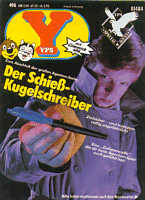
- Yps 496 (Der Schieß-Kugelschreiber)
Das war das Highlight ever, „aufgebohrt“ zu dem, was der Titel versprach aber nicht halten konnte.
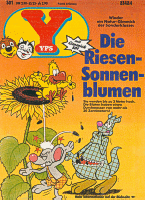
- Yps 501 (Die Riesen-Sommenblumen)
Die eine Sonnenblume die tatsächlich wuchs, war nicht sonderlich groß! Ich hab das dann nochmal mit normalen Sonnenblumenkernen probiert das klappte gut. Aber man konnte auf jeden Fall jeden Tag zugucken wie das Gewächs größer wurde.
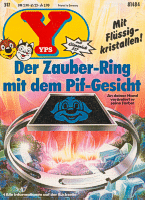
- Yps 517 (Der Zauber-Ring mit dem Pif-Gesicht)
Der Ring hat auf Wärme reagiert und dann die Farbe verändert. Das hat mich lange fasziniert!
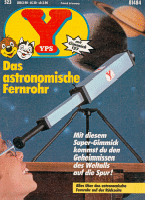
- Yps 523 (Das astronomische Fernrohr)
Damit habe ich erstmals in die Sterne geguckt. Es war primitiv gebaut, aber sehr wirkungsvoll! Einziges Manko, alles war auf dem Kopf stehend. Als Fernglas war es somit nicht wirklich geeignet.
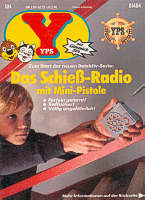
- Yps 524 (Das Schieß-Radio mit Mini-Pistole)
Dieses Schieß-Dings war bald langweilig, weil die Spezialpfeile immer wieder eingesammelt werden mussten und irgendwann weg waren.
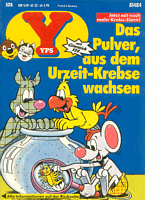
- Yps 528 (Das Pulver, aus dem Urzeit-Krebse wachsen)
Das Glas mit den Krebsen stand Publikumswirksam in der Küche.
- Yps 529 (Das Futter für die Urzeit-Krebse)
Das Futter war irgendwann alle und die Krebse dann auch…
- Yps 530 (Flummi, das flutschige Wabbel-Wunder)
Das teil war echt witzig und ein haptisches Erlebnis. Irgendwie eine Art frühe praktische Erfahrung des Möbiusbandes…
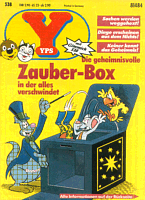
- Yps 538 (Die geheimnisvolle Zauber-Box, in der alles verschwindet)
Die Box war nett, aber der Spiegel darin war nicht sonderlich gut, so dass Aufmerksame Betrachter den trick sofort durchschauten.
- Yps 540 (Der Trick-Kaugummi mit der Finger-Falle)
Das teil hat bei meinen Freunden tadellos funktioniert und die herausschnellende Federklatsche, wenn man ein Kaugummi zog, tat echt weh. :-D
- Yps 543 (Der Ostereier-Baum aus Amerika)
Das Teil ist bei mir verdorrt. Diese Früchte habe ich nie gesehen.
- Yps 551 (Die verhexte Zigaretten-Box)
Das Ding war später fester Bestandteil meines Zauberkastens, den ich mal geschenkt bekam. Denn der Trick war wirklich gut und die Mechanik stabil!
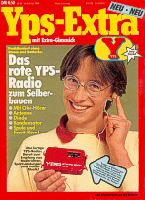
- Yps Extra 85001 (Das rote YPS-Radio zum Selberbauen)
Das radio war der absolute Hit, man konnte tatsächlich OHNE Strom etwas empfangen, aber man brauchte extrem gute Ohren! Mein Radio hat funktioniert.
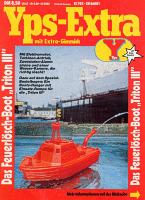
- Yps Extra 86001 (Das Feuerlösch-Boot „Triton III“)
Das Löschboot war genial, damit hab ich Wasserstrahlantriebe kennengelernt und zugleich das prinzip von Sirenen (wir hatten auf dem Schuldach eine Feuersirene!). Auf dem Gartenteich hat das Ding einige Runden gedreht!
…oder visualisiert als Cover – Quelle ist die grandiose YPS-Fanpage – Danke für die viele Arbeit und den tollen Hefte-Erscheinungsrechner…
Die YPS-Hefte waren für mich eine Instanz! Für wenig Taschengeld (das ich im Rückblick bestens investiert habe) bekam man eine Menge Information über Rätsel des Alltags. Am meisten haben mich die Zaubertricks fasziniert, oder die Gimmicks, die einen Überraschungseffekt hatten. Am langweiligsten waren für mich die Pflanzen und die Urzeitkrebse, aber die haben mich auch was gelehrt: Geduld! Die anderen Gimmicks waren dennoch interessanter. Den Schießkugelschreiber habe ich damals selber mit einer stärkeren Feder und einem selbstgebauten Griff aus Metall versehen. Da war ich stolz wie Oskar, das selbst hinbekommen zu haben. Und dann habe ich noch die perfekte Munition (Getreidekörner) dafür gefunden.
 Später gab es dann die KOSMOS Kästen, wobei der Chemiekasten meine „Feuerphase“ eingeleitet hat, aber auch der Elektronikkasten war nicht ohne. Elektrisch gezündete Raketen, Alarmanlagen an der Zimmertüre, das waren so Dinge die ich gebaut habe damit.
Bald ist übrigens wieder Weihnachten… einige Kids werden sich einen Ast freuen, über so ein Geschenk! Ganz sicher!!!
Update 28.1.2015
Arte TV bringt eine Dokumentation zu YPS bzw. dem französischen Original „PIF Gadget“.
Sendetermine:
Samstag, 31. Januar um 21:50 Uhr (52 Min.), Wiederholung: So, 08.02. um 2:50 Uhr
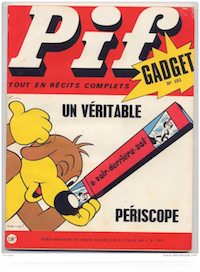
„Pif Gadget“ war in den 70ern die beliebteste französische Jugendzeitschrift. Sie ging aus dem kommunistischen Jugendmagazin „Le jeune patriote“ hervor und war das erste Magazin, dem ein Gimmick beilag. „Pif Gadget“ erreichte Auflagen in Millionenhöhe – viermal so hoch wie das Konkurrenzblatt „Le Journal de Mickey“. Ihren Erfolg verdankte die Zeitschrift aber auch den Comicgeschichten aus der Feder renommierter Autoren wie Goscinny, Gotlib, Mandryka, Uderzo, Mordillo, Tabary und Hugo Pratt. Es folgte ein internes redaktionelles Ringen um Kunst und Kommerz, was angesichts der kommunistischen Gesinnung der Herausgeber erstaunlich war.
Die deutsche Version „Yps“ erschien als westdeutsche Kinderzeitschrift ab 1975 und erreichte ebenfalls Millionenauflagen. Manche Gimmicks, wie die berühmten Urzeitkrebse, haben in Deutschland bis heute Kultstatus. Die Dokumentation zeigt, wie modern und innovativ „Pif Gadget“ seinerzeit war. Auf dem Höhepunkt seines Erfolgs passte das Magazin perfekt in seine Zeit: In den frühen 70ern spiegelte das Gimmick den damaligen Plastikboom wider, während man gegen Ende desselben Jahrzehnts versuchte, das Umweltbewusstsein der jungen Leser zu wecken.
In den 80ern zeigte „Pif Gadget“ erste Alterserscheinungen. Zwei Jahre nach dem Ende der UdSSR wurde das Heft eingestellt. Die Kinderzeitschrift verschwand jahrelang vom Markt. „Yps“ kehrte in Deutschland jedoch im Oktober 2012 als Magazin für Erwachsene an den Kiosk zurück – mit Urzeitkrebsen als Beilage.
Die Dokumentation kann man bereits im Web schauen und man muss nicht warten bis der Sendetermin kommt. Eine durchweg gelungene Dokumentation mit interessanten Einblicken zu Geschichte und Entstehungshintergrund von Pif Gadget aka YPS.
Why do I blog this? Nun, ich habe immer wieder mal so Geistesblitze, die in die Vergangenheit zurückreichen. YPS gehört absolut dazu. Das Magazin zeichnete sich meiner Ansicht nach durch noch eine Besonderheit aus: Es war ausschließlich an Männer bzw. Jungs gerichtet, was der Name des Magazins freiwillig oder unfreiwillig mit dem ‚Y‘ auch unterschwellig zum Ausdruck brachte. So gesehen war es mein erstes Männermagazin (so wollte ich den Blogtitel aber nicht nennen) das ich je gelesen habe. Und ich habe es toll gefunden! Die ganzen Detektivstories, die Tricks als Zauberer, die Technikgeschichte hinter der Entwicklung des Radios, usw. Was ist eigentlich das „Männermagazin“ der heutigen 10 bis 15-Jährigen?

 Der Chaosradio Express (CRE) hat seine 100ste Folge aufgelegt (Respekt!) und das Thema lautet: „Das Internet und die Hacker: Ein Blick auf die Anfänge der Internetze und das Wesen des Hackers“ Diese Folge eignet sich ganz besonders für die Generation-„Was there ever a time without internet?“. Tim Pritlove (Moderation) und Hans Hübner plaudern aus dem Nähkästchen – wunderbar unprätentiös und auf den Punkt. Wer gleich loshören möchte der klicke nachfolgend den von mir deep-gelinkten Player, alle anderen holen sich den Source hier (Achtung: Nettohörzeit ca. 2 Stunden).