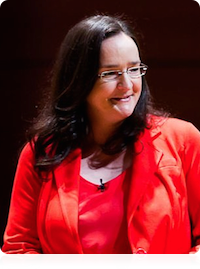
 Folgendes Video hat mich wirklich berührt. Tina Roth Eisenberg stellt hier fünf Ratschläge vor, die man für sein Leben berücksichtigen kann.
- Embrace your superpower
- Don`t complain, make things better
- Choose wisely who you hang out with
- Don`t forget to play
- Push to be better
Aus der Beschreibung zum Video:
Tina Roth Eisenberg was chugging along in her career as a designer… and then her daughter was born. She realized she had not yet become the kind of woman she had hoped her children would know. She immediately delved into a career as a serial entrepreneur that now includes an impressive group of “labors of love.” In this talk she shares five rules that have helped her launch businesses like Creative Mornings, Tattly, and Studiomates, among others.
Each was a side project that stemmed from a personal frustration. “I have a rule: If I keep complaining about something, I either do something about it or let it go,” says Eisenberg. The result: a group of projects that reflect the values dear to Eisenberg, most importantly using business to positively impact the lives of others.
Whether it’s through having a confetti drawer, keeping sane hours, or building environments that cultivate enthusiasm, Eisenberg urges us all to judge our success with the happiness and personal growth of those around us. “While I really love my work, my work is not me,” she says.About Tina Roth Eisenberg
Tina Roth Eisenberg, a Swiss born and raised graphic designer, runs four “side-projects gone businesses” out of DUMBO, Brooklyn; a collaborative co-working space called Studiomates, a global, monthly lecture series called CreativeMornings, TeuxDeux the simple to-do app and Tattly, a design-y temporary tattoo shop. Tina is often referred to as Swissmiss after her popular design blog which is also the name of her Twitter handle.
Tina Roth Eisenberg: 5 Rules for Making an Impact from 99U on Vimeo.
Why do I blog this? Insbesondere das Herausfinden, was die eigene „Superpower“ ist, ist schon ein ziemlich guter Schritt. Hinweis 2 erinnert mich stark an mein Lieblingsmotto von Gandhi „Wir selbst müssen die Veränderung sein, die wir in der Welt sehen wollen.“ so falsch ist das nicht. Konfetti in einer Schublade im Büro zu haben… das finde ich eine super Idee. Die Flasche Schampus sollte vermutlich auch nicht weit weg im Kühlschrank stehen.